Voice AI
How to Stop Missing Calls While You're on the Job
Missed calls can cost trades and service businesses work. Fix the basics first, then choose between a text-back, an answering service and an AI receptionist.

On this page
The short answer
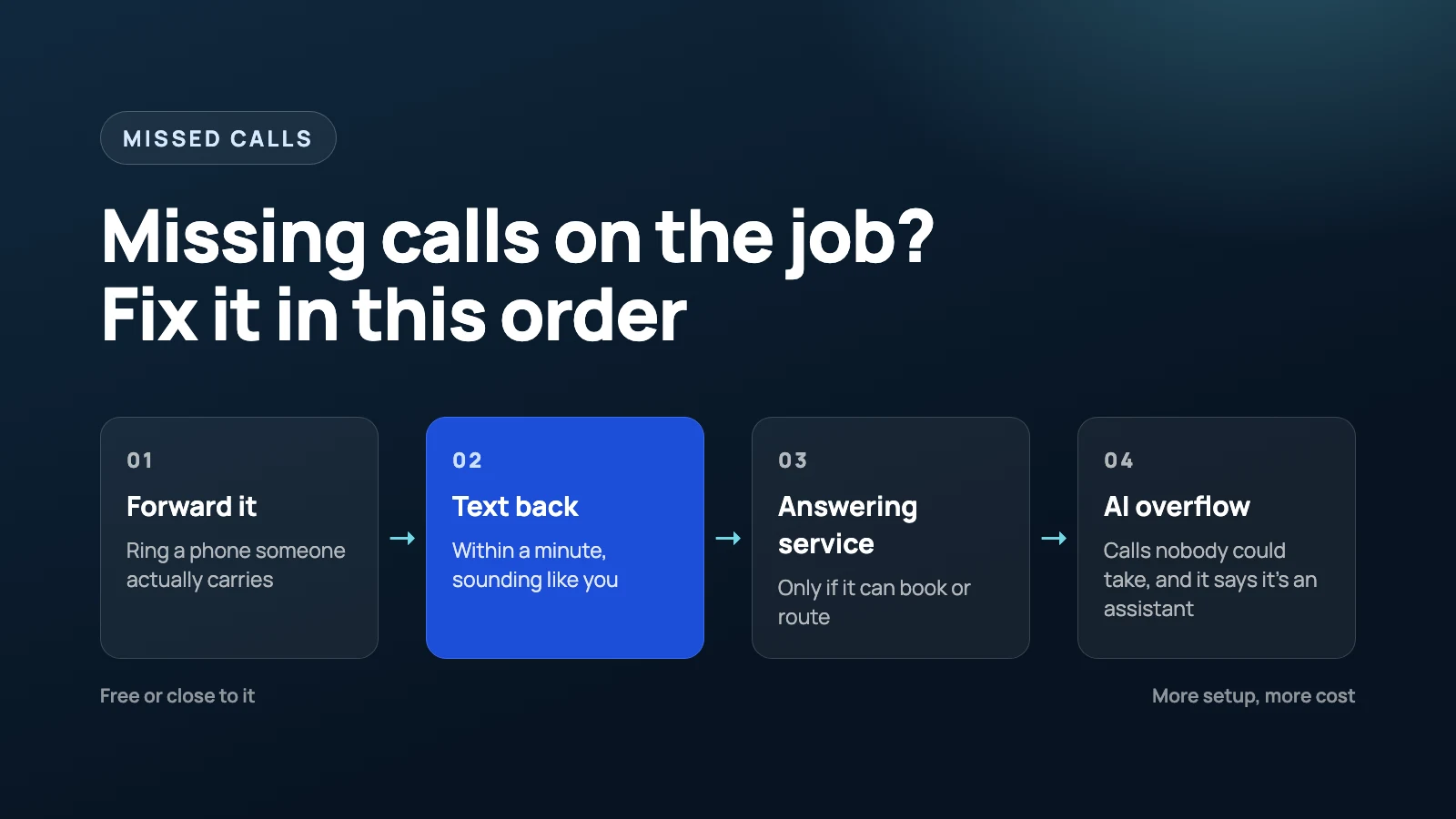
To stop missing calls while you’re on the job, check forwarding, send a short text when you can’t answer, and give someone responsibility for the callback. A missed-call text-back fits businesses that can return calls between jobs; an answering service fits callers who need a person; an AI receptionist can cover unanswered calls with clear limits. I’d fix the callback process before paying for more cover, because collecting messages doesn’t help if nobody acts on them.
Why can a missed call cost you the job?
A caller who needs a tradesperson may book someone else before you call back. You don’t need to assume every unanswered call was a valuable enquiry to take that seriously.
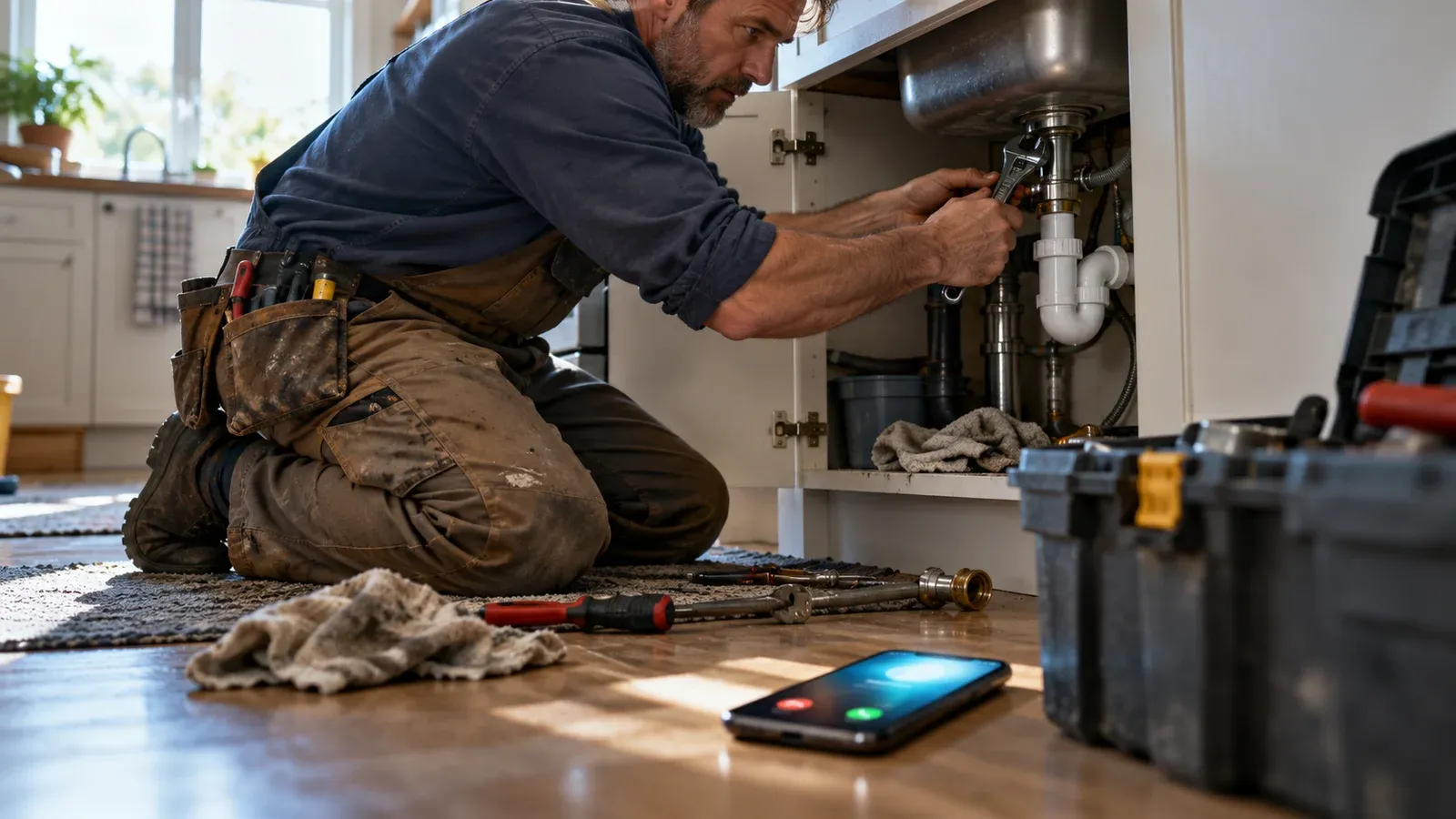
This came up in a Reddit discussion among small business owners, started by an HVAC owner struggling to answer calls while working in attics. I’d separate acknowledging the call from solving the enquiry: a quick text can start the conversation while you’re still busy.
I build AI receptionists for a living, but I wouldn’t recommend one just because you’ve missed a few calls. First find out when those calls arrive and whether the problem is answering them or finding time to follow up.
Which calls are you missing?
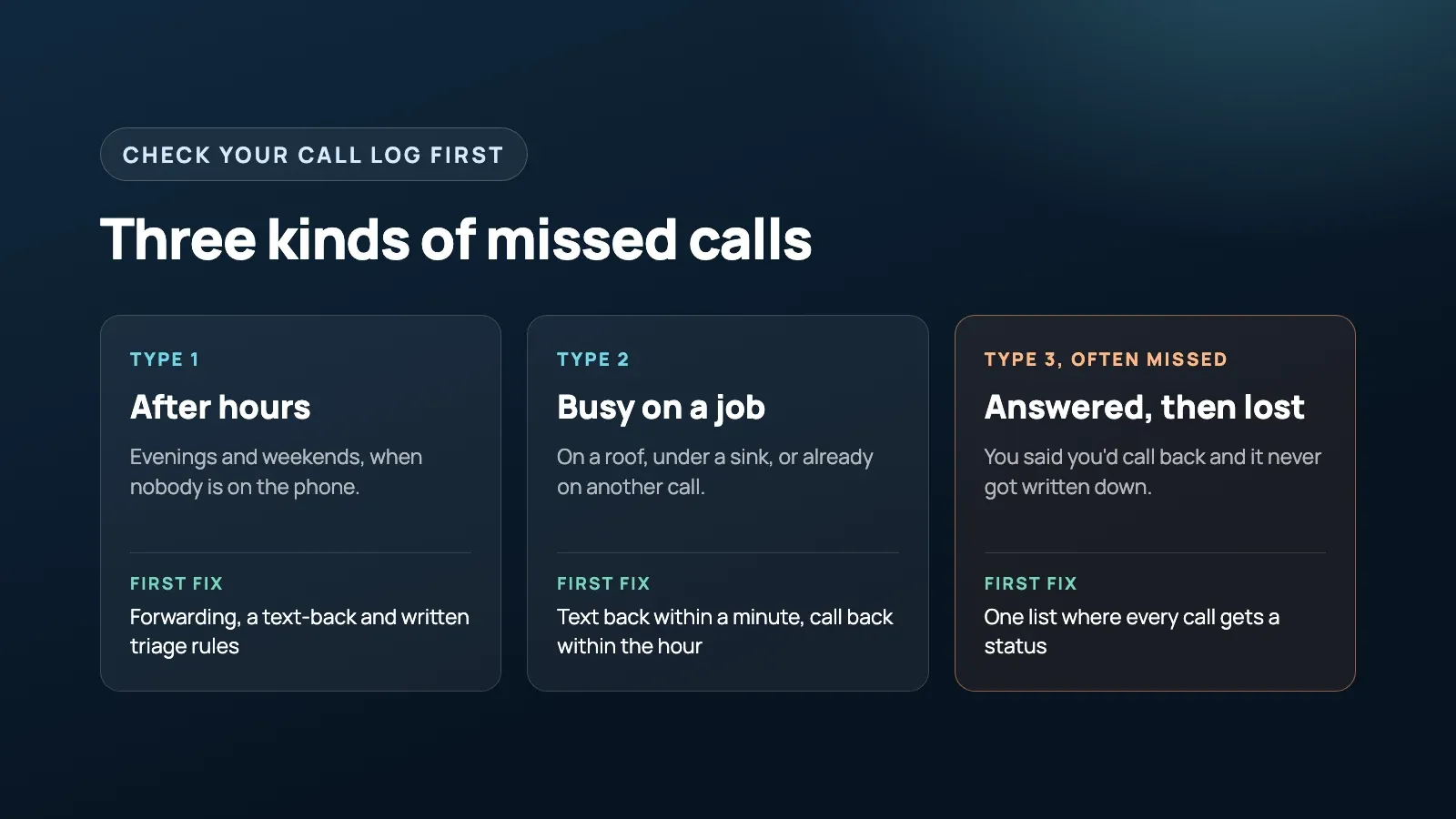
Look separately at after-hours calls, calls during jobs and conversations where you promised a callback but forgot. Your call log can help with the first two; you’ll need a written callback list for the last one.
| Type of missed call | What it looks like | First fix I’d try |
|---|---|---|
| After hours | Calls after you close | Clear opening hours, next-opening callback, optional cover |
| Busy during the day | You’re under a sink or on another call | Forwarding or text-back |
| Answered but lost | You promised to call back but never recorded it | A callback list with an owner and due time |
For two weeks, record the time, reason for the call and outcome. Include whether the caller booked, was outside your service area or never replied. That gives you something more useful than a raw missed-call total.
Check forwarding from another phone too. Test what happens when you ignore the call, reject it and have no signal. Ask your carrier how unanswered, busy and unreachable calls are handled on your plan. Don’t assume an overflow service receives calls just because you’ve entered its number somewhere.
What can you fix before buying another service?
Start with forwarding, a useful voicemail and protected callback time; your current phone setup may already support what you need.
If someone else can answer, agree when calls should reach them and what they’re allowed to say. Don’t forward to a colleague who is just as busy and assume you’ve solved it.
Rewrite voicemail so it gives the caller another way to leave details. Example greeting, for a number that accepts texts:
“You’ve reached Dave’s Plumbing. I’m on a job right now. Please text your name, area and what you need, and I’ll call back by 4pm today.”
Use a different greeting outside opening hours. A promise to call today shouldn’t still be playing after you’ve finished for the evening.
Before the first job, review unanswered calls from the previous evening. During the day, reserve callback breaks you can realistically keep. Put each enquiry on one list with a status such as awaiting callback, estimate booked or closed. Record who owns it, even if that’s always you.
Which of the three options fits your business?
Text-back fits a short delay, a human answering service fits conversations that need a person, and AI fits a defined answering task with a fallback. Judge the actual service rather than its label: a virtual receptionist might be a human or software.
| Option | When I’d choose it | What to check first |
|---|---|---|
| Missed-call text-back | You can’t pick up but can return calls between jobs | Replies reach someone, duplicates are suppressed, and the callback promise is realistic |
| Answering service | Callers need a human, or booking needs some judgement | Staff know your service area, booking rules and escalation contact |
| AI receptionist | You need overflow for routine enquiries | It identifies itself, captures details correctly and hands off when it can’t help |
If enquiries are already waiting because you have no room for more work, buying better answering won’t create capacity. I’d consider admin help or change availability messages before adding another way to collect requests.
Does a missed-call text-back work?
A text-back can acknowledge an enquiry while you’re busy, but it still needs a person to handle the reply and return the call. I’d start here when a short delay is the main problem.
Example message:
“Hi, this is Dave’s Plumbing. Sorry I missed your call; I’m on a job. What do you need and what area are you in? I’ll call you back by 2pm.”
Write the promise around your schedule. Within the hour is a useful target only when you can meet it. If you can’t offer a fixed time, tell the caller when the next callback window starts.
For the setup, I’d check that:
- The message goes promptly to eligible missed callers, with the business identified.
- Several calls from the same number don’t produce several identical texts.
- Replies arrive in an inbox someone checks, with an alert for a new enquiry.
- A callback or reply stops unnecessary follow-up.
- The wording changes outside opening hours.
Test repeat calls and an answered call too. You don’t want to text someone that you missed them after you’ve just spoken.
For the next steps, see my guide to automated lead follow-up, including stop rules. Before switching on automated messages, check your provider’s registration and messaging requirements for your country and number type.
Is an answering service worth it?
An answering service can be worth it when a person can move the enquiry forward or your customers need human cover. Taking a message can be useful, but it doesn’t remove your callback workload.
I’d give the service a short script covering your service area, opening hours and what an estimate includes. Specify which calendar slots it can book and which requests need your approval.
Before signing up, ask how staff handle a question outside the script. Listen to a sample call involving an unavailable appointment or a caller outside your service area, rather than just the easy booking demo.
Agree where messages go, who handles them and how urgent requests reach the duty person. If your contract requires human answering, confirm that the proposed service meets it. Don’t assume every product sold as a receptionist does.
Should you use an AI receptionist?
I’d consider an AI receptionist for unanswered calls with a narrow job, not as the default for every customer. Some callers hang up on AI, and a different voice won’t necessarily change their minds.
If customers expect to speak directly to you, start with text-back or human cover. If you try AI, review hang-ups and incomplete enquiries as well as completed calls. A system that collects tidy messages from the people who stay can still frustrate the people who leave.
These are the boundaries I’d write into the setup:
- Ring the team first, then send unanswered calls to the AI.
- Say it’s an AI assistant in the opening sentence. Example: “I’m Dave’s AI assistant. I can take your details for him to call back.”
- Let the caller explain the problem before asking for missing details.
- Keep simple message-taking brief. Don’t demand a questionnaire before accepting a callback request.
- Leave quotes, exceptions and unconfirmed appointments to a person.
- Provide a human route and an honest fallback if nobody answers that transfer.
For five Snap Fitness gym locations, including Spearwood and Cannington, we built branch-specific AI receptionists using Retell AI, Telnyx numbers and n8n. They answer when staff can’t pick up, take the caller’s name, number and message, validate the phone number and route to the right branch. We tuned them by reviewing real call recordings.
Before going live, I’d test interruptions, an unclear phone number and requests the system isn’t allowed to handle. Check that the team receives the right details, not just that the voice sounds convincing.
Which after-hours calls need a person tonight?
Requests involving immediate risk or worsening damage need escalation rules; routine enquiries need an honest next-opening response. Write those rules for your trade rather than letting whoever answers improvise.
As a starting checklist, ask:
- Has the caller described immediate danger or damage getting worse?
- Does the situation meet your written definition of urgent work?
- Who is available to review it, and what happens if they don’t answer?
- What can the caller be told about availability and charges without making an unapproved promise?
An AI or answering service shouldn’t diagnose safety problems or promise a technician without confirmation. Give it approved instructions for dangerous situations, including when to direct callers to emergency services instead of waiting for a business callback.
For routine work, give the next callback window. Only offer the first appointment tomorrow if someone has confirmed that slot exists.
FAQ
What is the cheapest way to stop losing missed calls?
Start with your existing phone setup: check forwarding, ask callers to text their details in your voicemail, and reserve time for callbacks. Then compare text-back options, including any setup and messaging charges, before adding another service.
Do customers hang up on AI receptionists?
Some do. I’d use AI for unanswered calls first, make its identity clear and give callers a route to a person. Review actual calls before deciding whether it suits your customers; a polished demo can’t answer that.
Is an answering service worth it for a small business?
It can be, especially when callers need a human or the service can book an estimate and route urgent requests. A message-taking service still needs someone in your business to return calls promptly.
What should a missed call text say?
Identify the business, explain that you’re on a job, ask what they need and where they are, and give a callback time you can meet. Don’t promise a reply within the hour unless someone can make that call.
Should an AI receptionist say it is AI?
Yes. I’d say AI assistant in the opening sentence and explain what it can do. Calling it an assistant without saying it’s AI leaves room for confusion. It should also explain how a person will follow up.
Final thought
I’d start with a two-week call log and fix whatever keeps a callback from happening. If the phone still goes unanswered while you’re working, choose cover based on the job it needs to do and check the handoff before trusting it with customers.
If you want help setting up call handling that fits how your business runs, including whether AI belongs in it at all, see our Voice AI service.
Free 30-minute strategy call
Want this working in your business?
Show us where time, leads, or money are leaking. We will map the simplest system that fixes it. If we are not a fit, you still leave with a clearer plan.
Book a Free Strategy Call